













Exploring the Innovation Process at LED Facial Mask Manufacturers
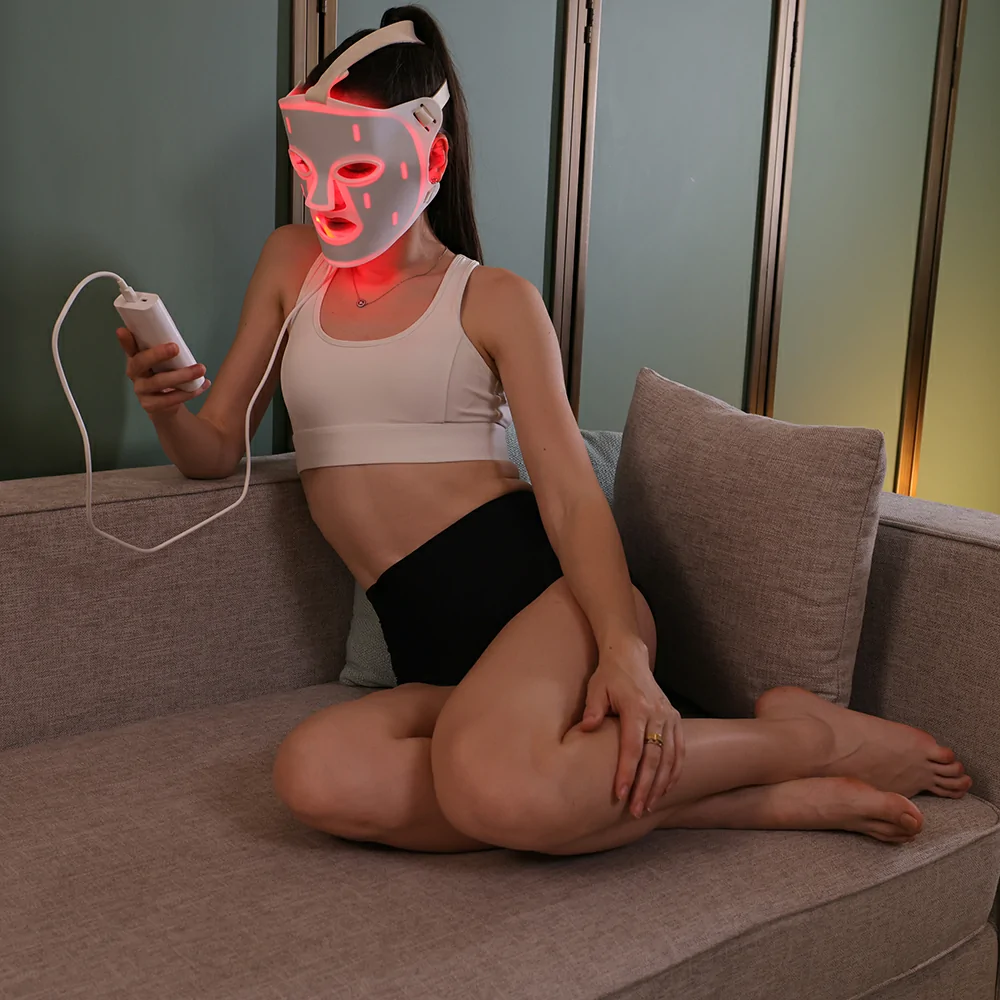
In the rapid development of beauty technology, the LED Facial Mask has not only become a representative product of intelligent skin care, but also an important symbol of technological innovation in the industry. Many consumers see the appearance and function of the product, but rarely understand the complex and rigorous manufacturing process behind these devices.
As the core force in the industry to promote technological upgrading, LED Facial Mask manufacturers are continuously delivering high-quality products to the global beauty market through process improvement, material optimization, optical innovation and intelligent integration.
Innovation is not an accident, but a systematic project
An excellent LED mask manufacturer usually needs to go through a whole set of professional process from project to mass production of its products. The table below shows the main stages and key aspects of this innovation process:
| Phases | Key Elements | Technical Highlights/Objectives |
|---|---|---|
| Market Research and Requirements Analysis | Analyze user pain points, competitive products, and regulatory requirements | Define target markets and find differentiated positioning |
| Product Prototyping | Industrial Design, Face Profile Matching, Material Selection | Combine ergonomics and aesthetics to determine the mask structure and wearing comfort |
| LED Optical Solutions | Wavelength combinations, bead arrangement, uniformity simulation | Precise spectral modulation to improve therapeutic effect while avoiding spot burns |
| Function Module Integration | Smart Control, Battery Management, Bluetooth/WiFi Communication | APP Remote Operation, Light Intensity Adjustment, Timer Shutdown |
| Safety and Compliance Testing | CE, FDA/510k, RoHS, EMC testing | Ensuring product compliance with electrical and skin safety standards in major markets worldwide |
| Small batch trial production and optimization | Process validation, user experience testing, packaging design adjustments | Final correction of process errors and refinement of user descriptions and experience details |
| Mass production and quality control | SMT assembly, aging test, packaging and warehousing | Strictly control the factory yield to improve the consistency and service life of the products |
The driving force behind technological innovation
The technological innovation of LED masks is reflected in several dimensions. For example:
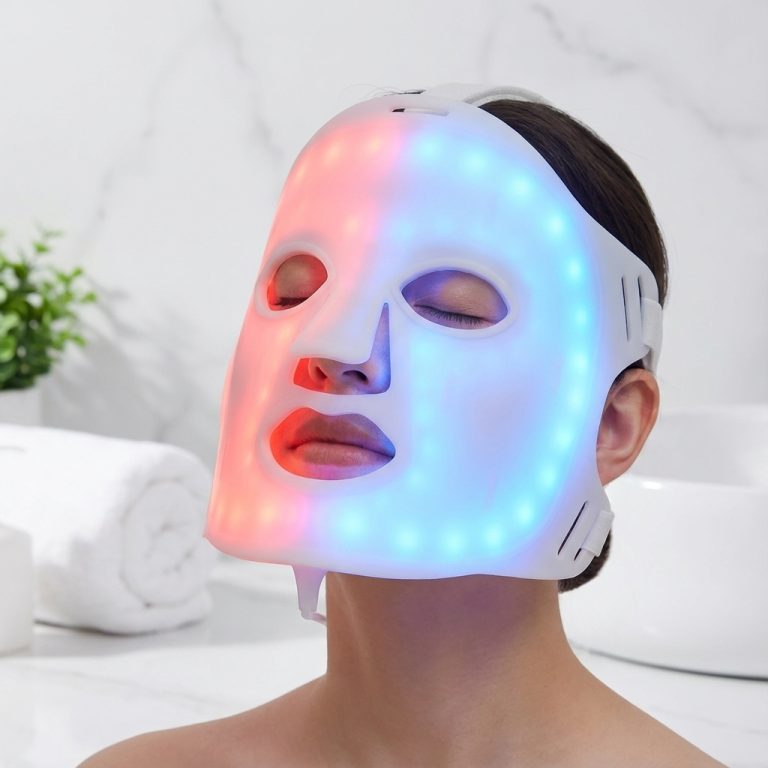
- Spectral refinement management: expanding from traditional red and blue light to composite bands such as near infrared, yellow light and green light;
- Intelligent control system: through Bluetooth APP or touch panel, realize light intensity adjustment, mode switching, voice prompts;
- Material evolution: shifting from hard-shell ABS to medical-grade soft silicone, which fits the skin better and is more comfortable;
- Structural innovation: full-face, one-piece, and localized care masks adapt to different market needs;
- Eco-friendly design: rechargeable batteries, eco-friendly packaging materials, in line with global green supply chain trends.
Leading manufacturers continue to invest in R&D and work closely with dermatologists and industrial design teams to make their products not only functional, but also aesthetically pleasing and practical.

Why a manufacturer’s ability to innovate determines a brand’s competitiveness?
For brand owners, distributors or beauty chains, choosing a manufacturer of LED masks with strong innovation ability not only means having a stable supply, but also a core source of product differentiation and competitiveness.
In OEM/ODM cooperation, the manufacturer’s innovation ability will determine:
- Whether the product has technical barriers
- Whether it can quickly respond to changes in market demand
- Whether it can realize the integration of functional customization and brand style
- Whether it can guarantee long-term quality stability
Especially in the European and American markets, consumers have higher requirements for “technology + beauty” products, which requires manufacturers not only to make “qualified products”, but also to continue to create “explosive products”.
From technology development to mass production, from optical design to user experience, every upgrade of LED face mask is inseparable from the systematic innovation ability behind the manufacturer. In the future, with the addition of AI algorithms, skin data analysis, biosensors and other technologies, the LED face mask will not only be a skin care device, but may become a “smart terminal” in personal care.
Choosing a truly innovative LED face mask manufacturer means standing at the forefront of technology in the beauty industry!
FAQ
Q1: How do the light waves of the LED mask affect the skin?
A: Different wavelengths of light penetrate into different layers of the skin, for example, red light stimulates collagen production, blue light sterilizes and fights acne, and near infrared promotes blood circulation and repair.
Q2: Can the manufacturer customize the combination of light waves I need?
A: Yes, professional OEM/ODM manufacturers can combine specific wavelengths and adjust light intensity and mode settings according to brand needs.
Q3: How long is the battery life of the innovative LED mask?
A: Depends on the frequency of use and light intensity setting, generally each charge can be used 4-6 times, 15-20 minutes each time, some models support fast charging.
Q4: What is the difference between the flexible silicone mask and the hard shell mask?
A: Silicone mask fits the facial curve better and is comfortable to wear; hard shell mask has a stable structure and is suitable for integration of multiple light sources for different usage scenarios.
Q5: How does the manufacturer guarantee the quality of the product during the production process?
A: Formal factories will conduct circuit test, aging test, heat resistance test and skin contact safety test, and pass CE/FDA and other international certifications.
Q6: How long is the general manufacturing cycle for LED masks?
A: Regular OEM orders are generally 30-45 days from sampling to delivery, depending on customization requirements and production scheduling.



 简体中文
简体中文 Français
 Deutsch
 Español
 Português
 العربية
 Русский
 日本語
日本語 한국어
한국어 Čeština
 Dansk
Dansk Magyar
 Polski
 Svenska